




Cut your AI bill by 95%.Keep the performance.
Most companies overpay for AI without realizing it. We find the waste, fix it, and show you exactly what you saved.
Real client, real numbers

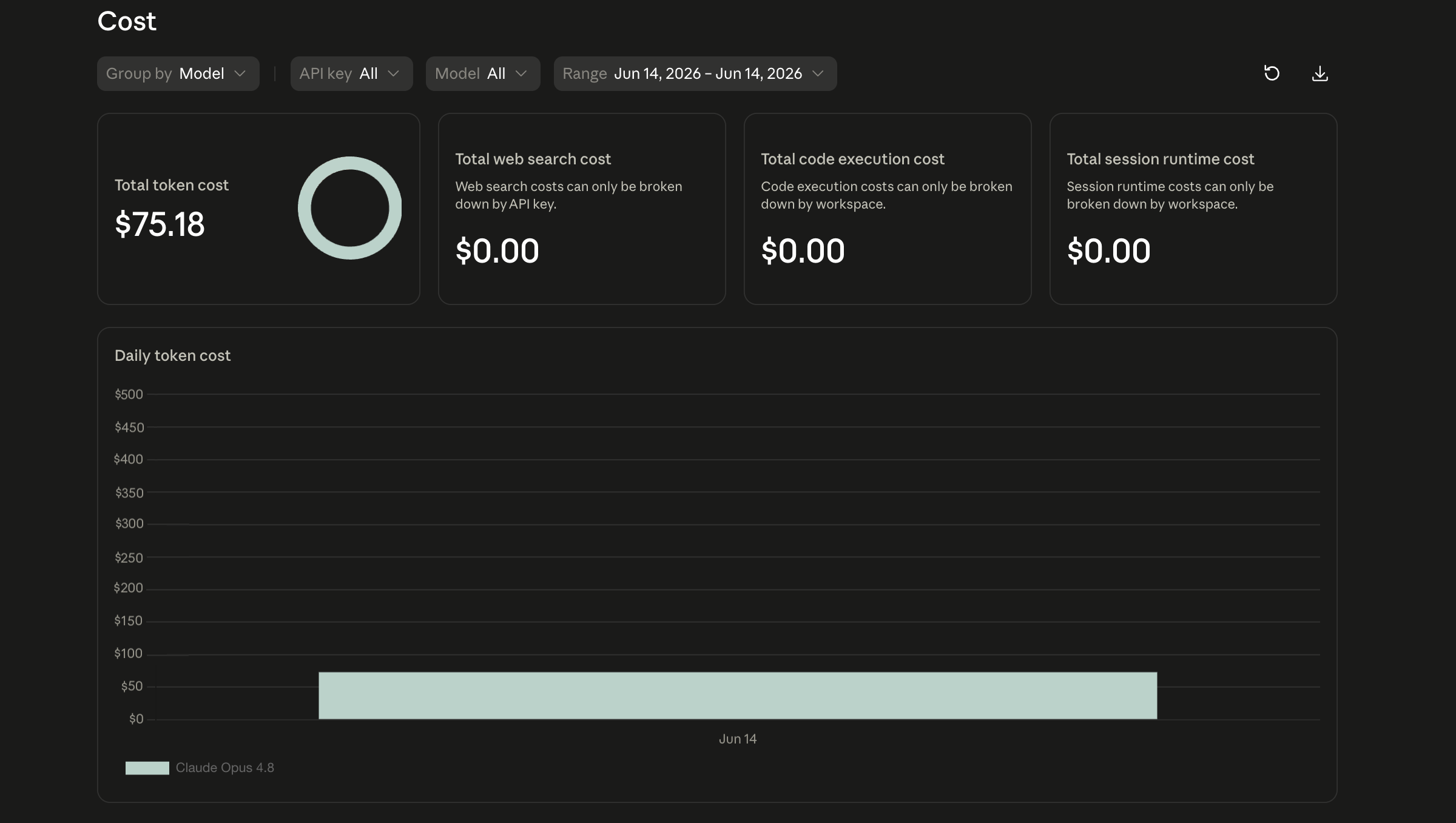
An AI math tutoring agent. Before we touched it, Lemmath was spending over $2,100/month on API costs — barely breaking even, with profit reduced to breadcrumbs.
Before
$2,100+/mo
After
~$240/mo
Before
After
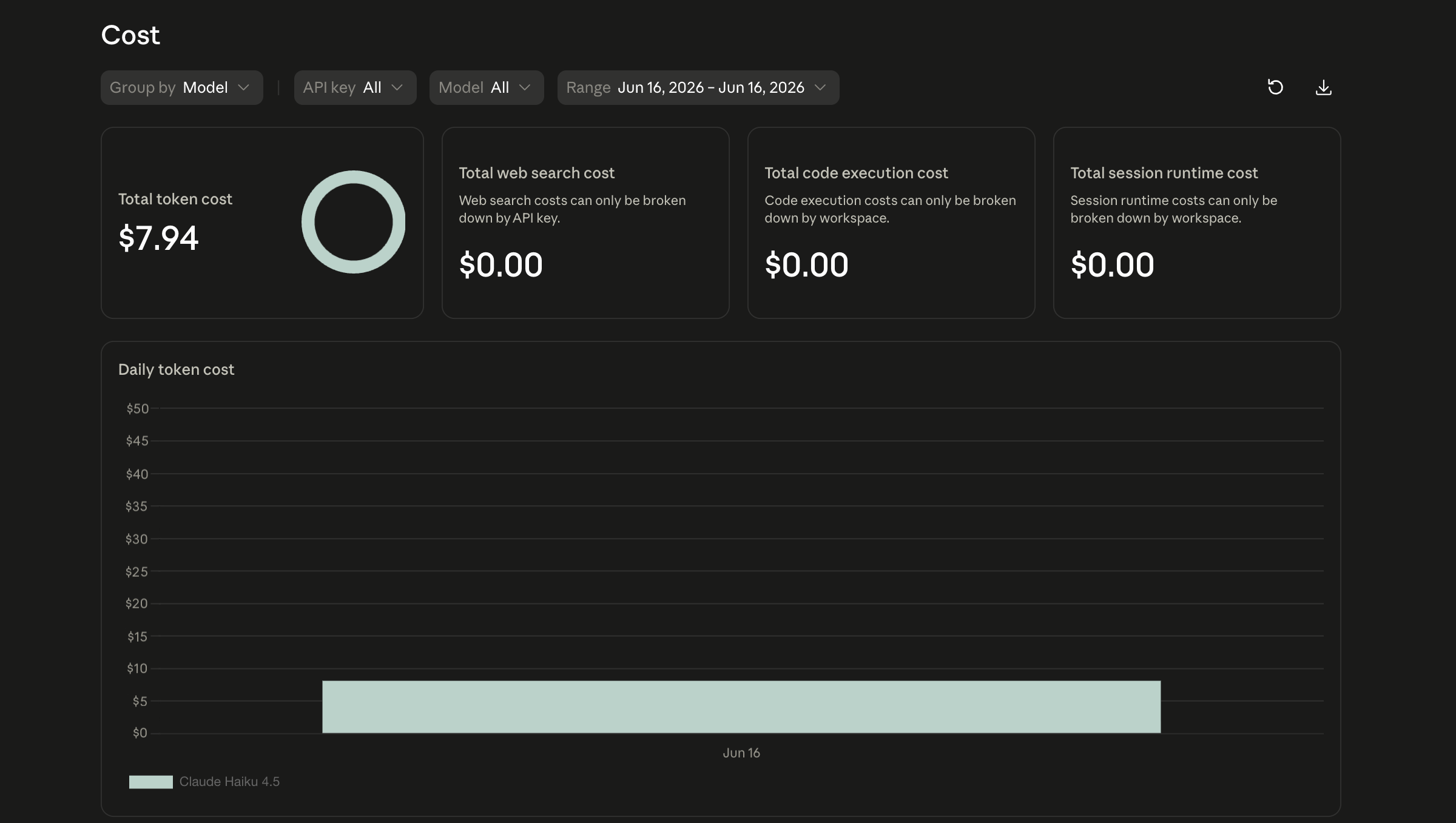
Note: the screenshots show daily usage — multiply by ~30 to get the monthly figures above.
Same task volume, same token usage, same tutoring quality — still very few mistakes. The only thing that changed was what it cost to run.
−89% costThe techniques
Four levers. Applied together, they compound.
These aren't tricks — they're how companies with serious AI bills keep them manageable.
90%
cost reduction on hits
85%
latency reduction
Store stable prefixes — system prompts, docs, instructions — so repeated calls pay only for cache reads at ~0.1× the normal rate. Breaks even after 2–3 requests.
$1/$5
Haiku vs $15 Opus output
<2%
quality degradation
Use Haiku itself as the classifier (~$0.001/req) to route by task complexity. 70% of calls are simple lookups — those never need to touch Opus.
50%
flat discount, all models
95%+
stacked with caching
Flat 50% discount on all models for async jobs. Nightly evals, enrichment pipelines, bulk summarization, test suites — anything without a real-time requirement qualifies.
3–5×
output costs more than input
40–70%
fewer tokens with structured output
Structured JSON/XML eliminates verbose filler. Explicit token budgets in system prompts. A classification task rarely needs more than 100 tokens — stop leaving 4,096 on the table.
Real numbers — 100M tokens/month, Opus-heavy baseline
Combined result
95%+ reduction
How it works
Three steps to a lower AI bill.
No lengthy onboarding. We look at your setup, find the waste, and fix it — fast.
Free audit
Send us your current AI setup. We analyze your models, prompts, and usage patterns within 48 hours.
We find the waste
We identify inefficiencies — wrong models, missing caching, bloated prompts — and quantify exact savings.
You save money
We implement the optimizations. You see the difference in your next billing cycle.
Why Leny Labs
Less waste. More performance.
We built Leny Labs for one reason: most companies are burning money on AI without realizing it. We find it, prove it with numbers, and fix it.
Right model, right task
We map every AI call in your stack to the cheapest model that maintains the same quality. Most teams save 40–60% here alone.
Prompt caching
If you send the same system prompt thousands of times a day, you're paying for it every single time. We fix that.
Prompt optimization
Bloated prompts cost real money at scale. We strip them down without touching output quality.
Output caching
Why generate the same response twice? We identify repeated outputs and cache them so you only pay once.
No vendor lock-in
We help you choose the cheapest path — direct API, open-source, or hybrid — without tying you to one provider.
Find out what you're overpaying.
Free audit. No commitment. We'll show you exactly where the waste is — whether you act on it or not.
Get a free audit